

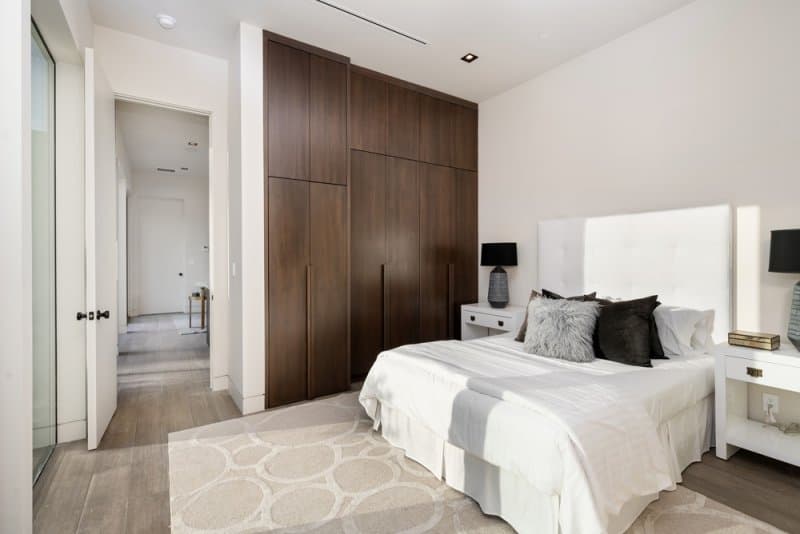
Wardrobes are some of the most commonly used furniture items in the bedroom. They need to be able to store clothes, organize possessions, and have the right dimensions to fit well into the room without cluttering up the space. There are many factors to consider apart from the look of the wardrobe. This bedroom wardrobe buying guide will take a look at the considerations that need to be made prior to purchasing.
The bedroom wardrobe buying guide begins with the wardrobe layout you need in your bedroom. Evaluate the various wardrobe designs based on their capacity, adaptability, and floor space required.
A freestanding wardrobe is portable and thus ideal for tenants, guest bedrooms, or houses where there are no built-in wardrobes. Ensure that it fits in its surrounding area and anchor tall wardrobes using the provided anti-tip kit.
The built-in wardrobe is mounted on the wall and occupies the wall space. It may be installed from floor to ceiling. It takes up odd-shaped space effectively but needs installation expertise.
The hinged doors give complete opening at once and enable incorporation of a mirror or other decorative finishes. Ensure that the doors will not collide with the bed, nightstands, and door openings.
Sliding doors suit compact bedrooms because they do not swing outward. Only part of the interior is accessible at once, and tracks need occasional cleaning.
Built-in cabinets can be made to your specifications and make the best use of wall space. But they require installation and are not portable or flexible.
Freestanding cabinets are easy to assemble and relocate. But their standard measurements may not fill the gap properly.
Consider total cost, installation, space, and other factors. Good bedroom wardrobes will address your storage requirements and not make you feel cramped.
First, the size of the wardrobe will be determined according to the width, height, and depth measurements. The wall and ceiling heights will be measured, taking into account skirting, sockets, radiators, windows, door swing, and sloping ceilings.
Depth is crucial because, to hang clothes, an average of 55-60 cm of interior depth should be sufficient. Smaller units might be suitable for folding clothes, but it must be ensured that clothes will not touch doors.
Space for a door swing or sliding tracks should be provided. Mark out the position on the floor with the help of masking tape to see if there is enough space around the bed.
The delivery route should also be measured. Check package dimensions against doorways, hallways, and stairs.
Design the inside space for hangers, folded garments, shoes, accessories, and seasonal items.
Examples of storage solutions inside a wardrobe:
Ensure that your daily clothes are accessible while your seasonal items are placed where they are easily accessible. If you are sharing a wardrobe, separate areas clearly to give everyone enough space.
A final part of this bedroom wardrobe buying guide is verifying the construction of the unit. The material determines its strength, ease of maintenance, and price. Solid wood is strong and durable, though it might be pricier. When it comes to engineered wood or MDF, look at the quality of edge sealing, thickness of panels, and joinery.
Look for stability of the hinges, smooth operation of the sliding tracks, and tightness of handles. A soft-close mechanism prevents slamming, while reliable drawer rails make using the unit easy.
Make sure the color matches the color of your bed, bedside tables, and floor. You can use mirrors to play with reflections, whereas wood tones add warmth to the room.
Set your budget so that it consists of more than just the cost of the closet itself. There might be additional costs for delivery, assembly, installation, interior fixtures, and fixing the wardrobe to the walls. Fitted wardrobes will need to have their measurements taken at the premises, whereas modular and freestanding closets might provide better price estimates. You should compare products that have the same interior, dimensions, hardware, and fittings so that you do not get the cheapest option lacking all important parts.
Another thing to consider is your future needs. Adjustability of shelves and rails might become really important if you plan on changing your clothes or other household items.
Your closet needs to be easily accessible even when it is located in a corner or in a room where there is not sufficient natural lighting. You can opt for built-in lighting to light up dark shelves and go for motion-sensitive lighting so that you can access your items without turning on the lights in the bedroom.
The clothes should not be placed in areas that are constantly wet. Follow the advice of the manufacturer regarding the ventilation channels and do not place wet clothes in the closet.
Assemble tall furniture as instructed and secure with the anti-tip device provided, particularly when children and animals are around. Follow guidelines on shelf and rail capacities.
Study assembly instructions, shipping, warranty, returns, and part replacements prior to purchase.
Don’t base capacity on the furniture’s external measurements or think that more shelves equate to more capacity. Consider clearance, shipping access, and hang space for clothes.
An ideal wardrobe will be appropriate for your room, will suit the method in which clothes are stored, and will always be convenient to use on a daily basis. Careful measurements, comparison of different designs, and material checking will help you choose one that suits you. A balanced combination of all factors will ensure that you have an organized bedroom without sacrificing any comfort.
Use this bedroom wardrobe guide while shopping. To read more about furniture, go to custombedroomfurnitures.com.
That will depend on how many dresses, coats, shirts, and clothing are hung there. Assess your needs, and leave some room so that clothes are not crammed together.
Mirrored doors are well known for making a space look larger and allowing full-length reflections. However, they should be cleaned frequently.
Yes, as long as it doesn’t obstruct natural lighting, airflow, drapes, or window opening/closing.
Confirm dimensions, materials, door mechanism, assembly, delivery access, warranty, and returns. Check which shelves, drawers, rails, and safety fittings are included.
Use adjustable shelves, double rails, drawer organizers, and upper compartments. Sliding doors save front clearance, while a planned layout reduces wasted space.
This content was created by AI