

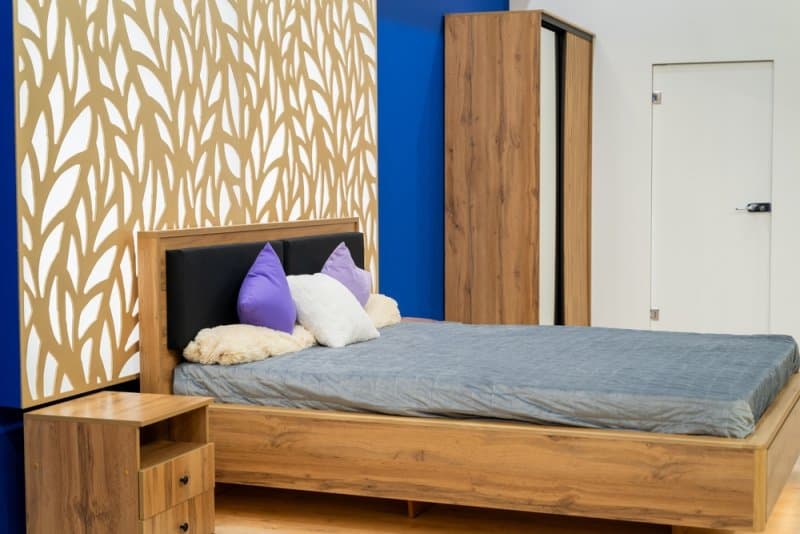
Bedroom furniture lives longest. A dresser can follow you through two apartments, a house, and finally a guest room, so material matters more here than for a trendy side table.
Still, in solid wood vs. engineered wood bedroom furniture, solid isn't automatically right. A first apartment, a kids' room that'll change in five years, and a forever bedroom all call for different priorities. In this blog, we break down solid wood vs. engineered wood bedroom furniture by the situation you're actually in.
Solid wood is cut straight from timber. Engineered wood bonds fibers, chips, or thin layers with adhesive. That's the technical difference. The practical side of solid wood vs. engineered wood bedroom furniture is how each behaves after years of drawer pulls and moving day.
Solid wood generally offers greater strength, can be refinished, and develops character over time. Engineered wood is often more affordable, comes in consistent finishes, and makes modern furniture styles accessible.
Your choice ultimately depends on your budget, usage, preferred appearance, and how long you expect the furniture to last.
Engineered wood furniture covers three very different materials. Lumping them together leads to bad choices.
MDF bedroom furniture uses fine wood fibers pressed with resin into dense, smooth sheets. It takes paint beautifully, so painted dressers often use it. The downsides are weight and weak screw holding after repeated assembly. Water is the big enemy, so wipe spills on MDF bedroom furniture fast.
Particle board furniture uses larger chips bonded with glue. Particle board furniture is the cheapest option and usually ships flat-packed. It's fine for light-duty pieces, but particle board furniture drawer bottoms can sag, and corners crumble when bumped during a move.
The plywood vs. solid wood furniture comparison is closer than most people expect. Plywood stacks thin layers crosswise, so it resists warping. Quality hardwood plywood can outperform cheap solid pine. In plywood vs. solid wood furniture debates, plywood often wins for wardrobes and wide panels.
Wood furniture durability shows most clearly over time. This table tracks how MDF bedroom furniture and the other options usually age.
| Material | After Two or Three Moves | After 10 Years | Repairable? |
| Solid hardwood | Minor dings | Can be refinished | Yes |
| Plywood with veneer | Holds up well | Edges may chip. | Partly |
| MDF | Loose hardware | Swelling if wet | Limited |
| Particle board | Sagging, stripped screws | Often replaced | Rarely |
Wood furniture durability isn't only about strength. It's about whether you can fix a piece, and in solid wood vs. engineered wood bedroom furniture, solid pulls ahead there. In plywood vs. solid wood furniture terms, plywood ages nearly as well.
Engineered wood furniture has a bad reputation, but the benefits of engineered wood are real when it's used for the right job. Price is only the start.
The benefits of engineered wood make the most sense for pieces you'll replace within five to seven years. In solid wood vs. engineered wood bedroom furniture choices, that timeline is the deciding factor, and the benefits of engineered wood fade the longer you keep a piece.
Solid wood bedroom furniture costs more upfront but can last decades. It pays off for some buyers and is overkill for others.
These situations show how wood furniture durability needs to shape the choice. Find the one closest to yours.
Solid wood bedroom furniture also holds resale value. A solid maple dresser can sell secondhand years later, while particle board furniture rarely finds a buyer. That resale angle often tips solid wood vs. engineered wood bedroom furniture decisions for homeowners.
If you win your solid wood vs. engineered wood bedroom furniture decision, species still matters. The best wood for bedroom furniture balances looks, hardness, and price.
For daily use, oak or maple is the best wood for bedroom furniture for most people, and maple is the best wood for bedroom furniture if you plan to paint. Cherry is the best wood for bedroom furniture if you want an heirloom look, and it pairs well with plywood vs. solid wood furniture hybrids that use cherry veneer on a plywood case.
There's no universal winner. The answer depends on how long you'll keep the furniture and what you can spend. Engineered wood furniture suits short timelines, where the benefits of engineered wood shine, while solid wood suits buyers who value wood furniture durability and the best wood for bedroom furniture they can afford.
Think about where you'll be in five years. If the answer is "same house, same bedroom," solid wood is worth the extra cost. If it's "who knows," engineered wood furniture keeps options open. Framing solid wood vs engineered wood bedroom furniture this way keeps the decision honest, and it makes solid wood vs engineered wood bedroom furniture shopping far less stressful.
Most are, especially pieces labeled compliant with US formaldehyde emission standards. Airing new pieces out also helps.
Yes. Many plans spend on the bed and dresser and capture the benefits of engineered wood on shelves.
The frame might, but slats and center supports matter more for wood furniture durability. Look for solid wood or metal slats with a center rail.
With light use, several years. Frequent moves or humid rooms shorten its life quickly.
Usually not, since guest rooms see light use. That's one case where solid wood vs. engineered wood bedroom furniture clearly favors engineered.
This content was created by AI