

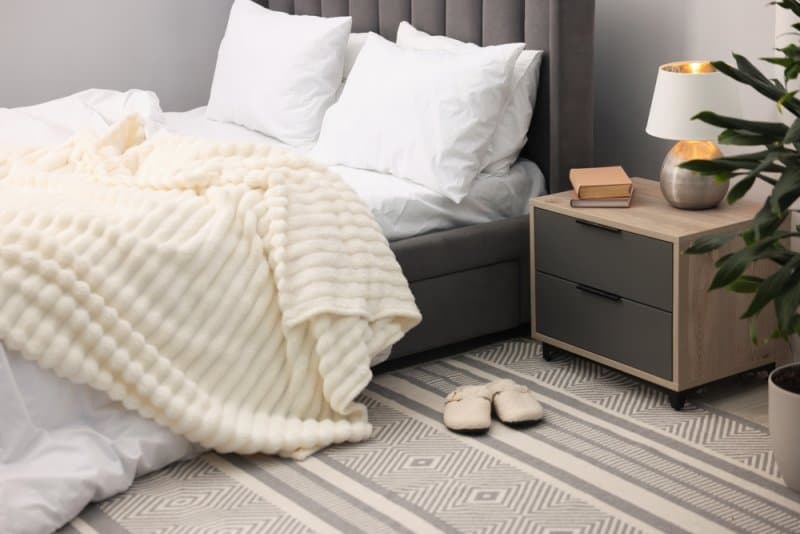
The nightstand will keep everything within arm’s reach, give you somewhere to light up, and also maintain equilibrium at the bed level. Selecting the best nightstands for your bedroom requires more than just finding one with an appealing finish. Size, height, space, and construction all play a role here.
The right choice should complement the room while making nighttime routines easier.
Nightstands can be found in many different styles, such as cabinet-style, minimalist, and wall-mounted. This depends on your need for storage and available floor space.
A traditional nightstand is a nightstand with drawers, a lower shelf, or a cabinet. Wood finishes and decorative pulls go well with traditional-style bedrooms. The enclosed storage makes sure you keep things out of sight.
The floating nightstand hangs on the wall and gives you more room for floor space as well as easier cleaning. It may include a drawer or just shelves. Take care of the wall structure, hardware, weight capacity, and the height at which you want to install it before selecting one.
Open shelves give easy access to the books and baskets, but things will always be seen and collect dust as well. An organizer would be needed to organize the shelf.
This nightstand is characterized by clean lines, simplistic hardware, and unadorned finishes of wood, metal, or glass. Make sure that the minimalist design provides sufficient space and storage.
Begin your nightstand height guide with the mattress height, not the conventional furniture size. Measure from the floor to the mattress height, including any mattress topper. The surface of your nightstand should be close to mattress height or even higher to give you quick access to what is required.
Depending on the height of your platform bed and mattress, you may require taller or shorter nightstands. Lamp placement is another important factor to consider as well. If buying two tables, measure the height of one mattress only and then use it to compare both tables. This is because any discrepancy in height will be easily noticeable when the tops align with the headboard.
Remember that you should consider the things that go on top of the surface of your table. A tall lamp will make your nightstand appear heavy, whereas a short lamp will look like it is disappearing beneath a large headboard.
The best nightstands for bedroom layout are those that are proportionate without hampering your movement in any way. It is important to measure the width of the area where the table will stand on either side of the bed as well as the depth in order to ensure that it does not obstruct a walkway.
A wider bed can accommodate a large-sized table, whereas a smaller bed could accommodate a smaller table. The size of the table must also depend upon the room size. Ensure there is enough room left to walk and open the drawers in case of a bedside table. Painter's tape can be used to test the size of the table.
It is also important to ensure that the tabletop has enough space to accommodate your items, such as a lamp, a phone, a book, and a bottle of water. Too small a table would not suffice, and too large a table would make the room look cramped. You must ensure that you have room left to keep a reading lamp, charger, and glass, which should be kept at least an inch away from the table's edge.
Consider the accessibility and visibility of storage according to your needs.
Nightstands with drawers are better at concealing things like your charger, journal, sleep mask, and other accessories. One drawer is good enough for all necessities, but two or three will provide better segregation. Consider the depth and drawer motion along with their number.
Shelves are ideal for your books and things that you use often. Larger things are stored in cabinets, while mixed types have both concealable and accessible storage.
Small bedroom nightstands should provide useful function without taking over floor space. The right types include narrow tables, pedestals, and wall shelves.
A wall-mounted table leaves the floor clear, whereas a slender one-drawer table offers storage space under cover. Wall shelves must be mounted securely and placed away from places where they can get knocked off.
Materials influence look, upkeep, and longevity. Hardwood is durable and fixable, but quality and cost differ. In engineered wood or medium-density fiberboard, pay attention to the panel’s thickness, edges, and connections. Metal gives a modern impression; glass seems transparent but requires regular cleaning.
Consider daily usage as well. The top of a bed can be exposed to water, makeup, hot beverages, and other charging equipment. A highly finished surface is easier to clean; others might require coasters or special care. In case the bedroom is frequently exposed to direct sunlight, think about the aging of the finish.
Make sure drawers open without difficulty, handles are securely fastened, and doors match. A soft-closing mechanism ensures quieter operation. Concerning charging ports or openings for cables, consider their location and avoid placing cables on pathways. Extra features should not compromise good build quality.
While the nightstand does not necessarily have to coordinate with the bed, it must be related through its color, materials, shape, or finishes. Repeat the wood color or hardware detail throughout the room.
Matched tables are symmetrical. Tables with dissimilar shapes can also work if they are the same height and have the same finishes or shapes, especially when the two different sides have differing requirements.
Use the Nightstand purchase guide to verify information that might not be revealed by photographs of the product:
The best nightstands for bedroom use meet these needs and complement your decor. Don’t pay for features you won’t use, or sacrifice stability for looks. Do not use compact, standard, or oversized labels; instead, compare the product dimensions with the actual measurements you took. When buying online, check out customer photos, if available, to get a sense of the size, finish, and drawer proportions.
Choosing the best nightstands for bedroom use depends on your lifestyle and room dimensions. A proper nightstand will allow you to keep all your necessities within reach without affecting the arrangement. Take time to compare height, width, depth, and material before settling on a cabinet nightstand, a floating nightstand, or a modern nightstand.
For further guidance, check out custombedroomfurnitures.com.
Having a pair of nightstands will bring some symmetry into the interior design, as well as provide a surface for each side of the double bed. But one nightstand is enough if you have a bed placed against a wall.
You can put items that you often need there, like a lamp, a phone, a book, glasses for reading, or water. Use drawers or organizers for smaller personal belongings to prevent the tabletop from becoming cluttered.
Yes, a small dresser will serve as a nightstand and give some extra room for storing clothes and personal items. It would be good to check the height of the dresser in comparison to your mattress and its depth.
Open nightstands require regular dusting because their shelves and stored belongings remain exposed. Storage baskets can help keep items organized, but closed drawers or cabinets are more suitable if you prefer concealed storage.
No, nightstands do not need identical heights, but keeping their tabletops at similar levels creates a balanced appearance. For shared bedrooms, consider mattress height, individual reach, and everyday storage requirements when choosing them.
This content was created by AI