

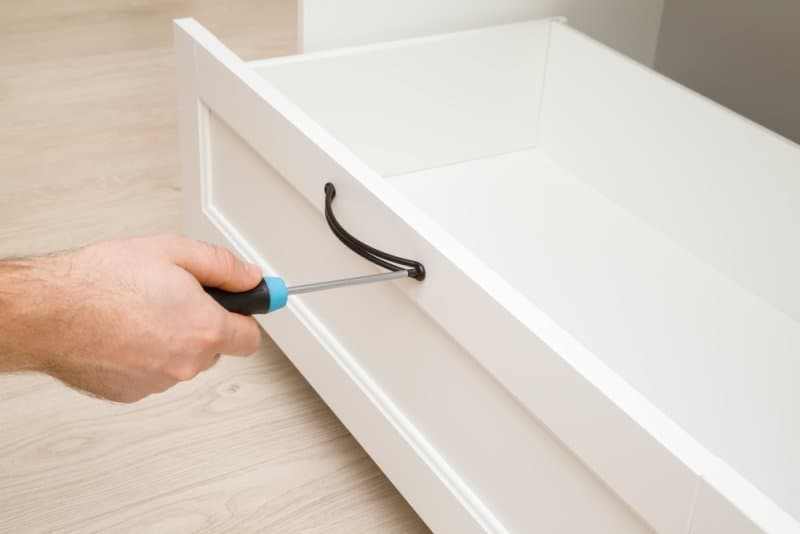
You grab your kitchen drawer to pull out a fork, and the handle rattles like a loose tooth. A week later, it practically comes off in your hand. Most people look at a beat-up dresser or cabinet and assume it is time to haul it to the curb and cost you $500 on a new one. That is a massive waste of cash. Knowing how to fix loose drawer handles takes ten minutes and costs almost nothing. Usually, the furniture itself is totally fine—it is just the hardware or the screw hole giving out.
A wobbly pull is annoying, sure, but ignoring it will wreck your furniture. Every time you yank a loose handle, the metal screw chews away at the wood inside the hole. Wait too long, and a five-second turn with a screwdriver turns into a crumbled mess. Catching the wobble early saves your dresser from the curb.
You do not need a massive workshop to pull this off. Grab a hand screwdriver and follow these exact steps to get the job done right.
Pull the drawer open and clear out anything blocking the inside front panel. Wiggle the handle with your fingers to see if the metal itself is cracked or if the screw head on the inside is just backing out.
Never use a cordless drill here. Grip the pull tightly on the outside so it cannot spin, then turn the screw clockwise with a manual screwdriver until it feels snug. Stop the second you feel firm resistance so you do not crush the finish.
If the screw just spins in place, the hole is worn out. Pull the screw completely out, coat two wooden toothpicks in standard PVA wood glue, jam them into the hole, and snap them off flush. Let it dry, then drive the screw back in for a rock-solid bite.
Tired of repeating this every month? Slide a small metal washer under the screw head inside the drawer to spread out the pressure. Dab a drop of removable blue threadlocker onto the metal threads before tightening, and that screw will not budge.
Sometimes a handle is too bent, cracked, or ugly to salvage. When you decide to tackle a full drawer handle replacement, a few quick checks stop you from buying parts that do not fit.
Do not measure the whole length of the handle. Take a tape measure and check the exact distance from the center of one screw hole to the center of the other. Standard sizes usually sit at 3 inches, 4 inches, or 96 mm.
A screw that is two millimeters too short barely grabs the handle. One that is too long bottoms out inside the post and feels tight even though the handle still rattles. Always match the screw length to the exact thickness of your drawer front.
If you are dealing with cheap flat-pack furniture, the chipboard around the screw hole probably looks chewed up. Buy new handles with wide backplates. They hide the ugly damage and spread the pulling force across a much wider area.
Never twist a metal pull just to force a stubborn screw into a slightly crooked hole. That builds constant tension into the hardware, guaranteeing it will work itself loose again within a month.
Snapped metal or split wood calls for a different game plan. Before you start a broken drawer handle repair, weigh these factors so your fix actually holds up.
Solid oak grips a wood screw like a vice. MDF and particleboard crumble the second you overtighten them. If the hole in an engineered wood drawer is blown out, toothpicks won't cut it—you will need to glue in a hardwood dowel or install a metal threaded insert.
Reach for standard wood glue when you are reinforcing wood fibers with toothpicks or dowels. Use two-part epoxy if you are filling a wide gap or bonding broken metal pieces. Keep superglue away from painted or stained fronts, because it dries brittle and leaves cloudy white stains.
Why did the handle break in the first place? Usually, the drawer jams on its slides, forcing you to yank the pull with all your weight. Clean the debris on the tracks and hit them with a quick shot of silicone lubricant so the drawer glides smoothly.
Tossing out a perfectly good cabinet or dresser just because a pull feels shaky makes zero sense. Hardware takes a beating every single day, and screws naturally back out over time. Once you know how to fix loose drawer handles, you stop paying for unnecessary replacements and keep your favorite pieces looking sharp. Put the power drill away, keep some wood glue and washers in your junk drawer, and fix the wobble the moment you feel it. A few minutes of basic maintenance beats hauling heavy furniture out to the curb every single time.
Take the screw out, clean any dust off the threads, and put a single drop of medium-strength blue threadlocker on the metal. Slide a small flat washer onto the screw before threading it back in by hand.
If the metal or ceramic pull snapped in half, clean both broken edges with rubbing alcohol and bond them with a heavy-duty two-part epoxy. Clamp the pieces tightly for 24 hours, though replacing the handle is safer for heavy daily-use drawers.
For mild wear, pack the hole with wood glue and wooden toothpicks, snap them flush, and re-drive the screw. If the hole is completely blown out, drill it clean, glue in a solid hardwood dowel, trim it flat, and drill a fresh pilot hole.
Particleboard is just compressed sawdust and glue. It lacks long wood fibers, so repeated pulling crushes the soft material around the screw shaft until the hardware has nothing left to grip.
No. Liquid threadlocker is engineered to cure only when squeezed between two metal surfaces without air. Use it strictly on machine screws that thread into metal handle posts, never on wood screws biting into raw timber.
This content was created by AI