

Nothing kills a good night of sleep faster than a bed that screams every time you roll over. You shift an inch to grab your pillow, and the entire room echoes like an old haunted house. Most people assume they need to drop a thousand dollars on brand-new furniture just to get some peace. That is a total waste of cash. Knowing how to fix a squeaky bed frame usually takes twenty minutes, a basic Allen wrench, and a few cheap items already sitting in your kitchen junk drawer. You just have to figure out where the friction lives and cut it off at the source.
A loud bed does way more than just annoy you at two in the morning. Every single creak pulls your brain out of deep sleep, leaving you exhausted all day. Worse, that grinding sound is an early warning sign of structural failure. Ignore loose joints long enough, and the frame eventually snaps right under you.
You cannot silence the noise if you are just guessing where it comes from. Most people deal with a noisy bed frame because of a few mechanical failures that build up over time.
Getting in and out of bed creates constant micro-vibrations. Over a few months, those tiny shakes slowly unscrew your bolts and nuts, letting the side rails shift and grind against the corner posts.
Steel frames look tough, but dry metal rubbing against dry metal produces that sharp, high-pitched shriek. Once the factory coating wears thin at the joints, every tiny movement gets loud.
Old hardwood floors are rarely flat. If one corner leg hovers a fraction of an inch off the ground, the entire frame twists under your weight and groans loudly.
Strip the mattress and box spring completely off the base before you start. Once you expose the bare skeleton, work through these proven squeaky bed solutions until the noise disappears.
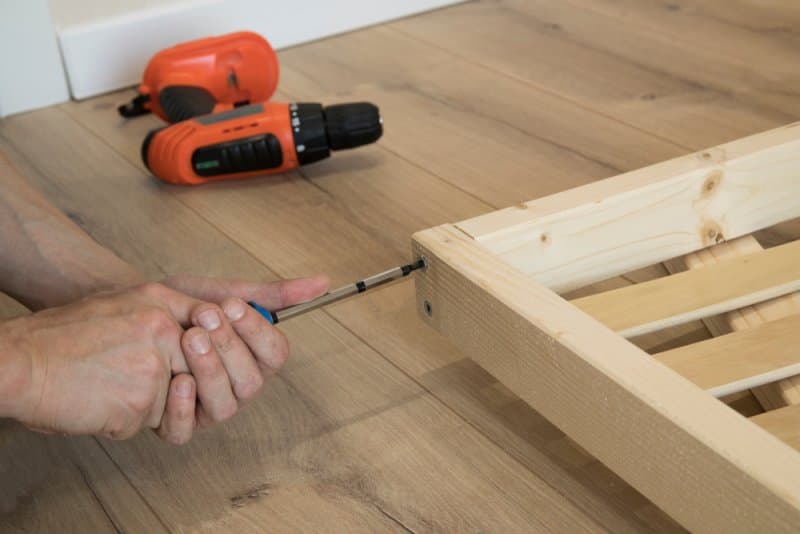
Grab your screwdriver or Allen key and check every single joint on the frame. Pay close attention to the headboard brackets and center rails, as those carry the heaviest daily load.
If a screw spins endlessly or backs out a week after you tighten it, the metal is slipping. Pull the bolt out, slide a rubber or metal lock washer onto the shaft, and crank it back down tight.
For steel or iron frames, grab a can of dry silicone spray. Hit the corner brackets and hinge points directly, then wipe away the drips so it does not stain your rug.
Never put oil on wood. Instead, take a plain white paraffin candle or a dry bar of soap and rub it heavily along the wooden ledges where your slats rest to kill the friction instantly.
Adhesive felt strips are a lifesaver for noisy slats. Stick small squares onto the ends of each slat where they touch the frame so wood stops grinding directly against wood.
If you spot a visible gap between a loose joint or a floating leg, fold up a thick piece of cardboard or slice a cork pad. Jam it tightly into the space to stop the wobble.
Running on a zero-dollar budget? Slip old cotton socks or strips of an old T-shirt over the ends of your wooden slats to create a thick, silent fabric buffer inside the metal brackets.
Sometimes the bed is fine, and the legs are just scraping your floorboards. Stick heavy-duty rubber gripper pads under every single leg to lock the frame in place.
Wooden beds held together by pegs eventually dry out. Pull the joint apart, squirt a solid bead of wood glue into the hole, push it back together, and clamp it overnight.
Queen and king beds rely heavily on those hidden legs under the middle rail. Make sure the adjustable feet are twisted down tight enough to press firmly against the floor.
If your mattress is sagging right between wide slats, it will creak constantly. Dropping a thin piece of bunkie board or plywood over the slats evens out the weight immediately.
Jumping straight into a squeaky bed frame fix without a quick inspection usually leads to wasted effort. Keep these three rules in mind before you grab your toolbox.
Metal and wood behave totally differently. Metal frames need annual tightening and silicone lubricants, while wooden frames respond much better to wood glue, felt tape, and dry wax.
Have someone rock each corner of the empty frame while you put your ear close to the joints. Press down hard on the center rail too. Knowing the exact corner saves you from taking the entire bed apart.
You do not have to live with a bed that wakes up the whole house every time you turn over. Most frame noise is just simple friction begging for ten minutes of basic maintenance. Once you know how to fix a squeaky bed frame, you stop guessing and attack the exact loose bolt, dry metal bracket, or shifting slat causing the headache. Pull the mattress off this weekend, run through the checklist, and tighten everything down properly.
Start by pulling the mattress off and pressing down on the bare frame to isolate the loud spot. Tighten every visible bolt with an Allen key, slide felt pads under loose slats, and hit any rubbing metal joints with silicone spray.
Your body weight forces loose parts to shift and rub together. Over time, normal daily movement slowly loosens screws, compresses wooden joints, and wears down the finish on metal brackets, creating loud friction every time you shift.
Focus on dry friction barriers. Tighten the corner hardware, rub plain candle wax along the ledges where the slats sit, and stick thin felt pads between any wooden boards that touch directly.
This content was created by AI