

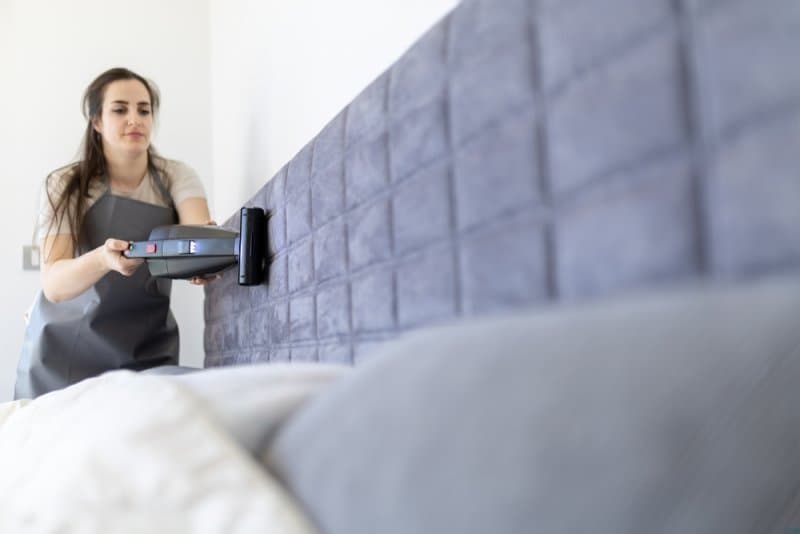
An upholstered bed frame looks incredible when you first set it up. Give it six months, though, and that crisp linen or soft velvet starts looking dull. You lean against it every night to read or scroll on your phone. Hair products, natural skin oils, and bedroom dust slowly build up until there is a dark, greasy patch right behind your pillows. Most people panic, grab a wet rag with soap, and scrub furiously—which usually makes the stain twice as big. Learning how to clean upholstered headboard fabrics properly saves you from trashing an expensive piece of furniture. You don't need harsh chemicals or a professional crew. You just need the right technique, a little patience, and a strict rule against over-wetting the foam.
Fabric bed frames look great until they start trapping dust, dead skin, and hair oil. Cleaning them isn't like wiping down wood. If you scrub too hard or dump water on the padding, you will ruin the foam underneath. Proper care comes down to reading the manufacturer's tag and using minimal moisture.
You can check the following list to understand the importance of upholstered headboard cleaning:
Fabric acts like a giant air filter. It traps pollen, pet dander, and dust mites right next to your face while you sleep. Wiping it down regularly keeps your sinuses clear.
Body oils and hair conditioners break down fabric fibers over time. If you let that grease sit for a year, it oxidizes and turns into a yellow stain you will never get out.
Good upholstered beds aren't cheap. Keeping grit and dirt out of the weave prevents the threads from fraying and wearing thin, adding years to the life of the frame.
Soft surfaces hold onto smells. Sweat, stale air, and pet odors sink straight into the batting. A quick refresh keeps the entire room smelling clean.
You can't just attack a fabric frame with random bathroom sprays. Follow this exact sequence for safe fabric headboard cleaning that won't leave watermarks behind.
Flip the bed frame around or look underneath for a hidden tag. It will have a letter like W, S, WS, or X. That single letter tells you whether water is safe to use or if it will wreck the material.
Snap the soft brush attachment onto your vacuum. Go over the entire surface slowly. Pay extra attention to tufted buttons and deep seams where crumbs, hair, and dust love to hide.
If your tag allows water, mix a few drops of clear dish soap into a bowl of lukewarm water. Stir it up until you get a thick layer of suds. You want to use the foam, not the liquid.
Dip a clean white microfiber cloth into the suds, wring it out until it is barely damp, and dab the fabric gently. Work from the top down so dirty runoff doesn't streak over spots you already cleaned.
Grab a second cloth, dampen it slightly with plain water, and blot away any leftover soap residue. Open a window or point a box fan directly at the headboard so it dries fast.
Knowing the basic steps is good, but avoiding rookie mistakes is what keeps your bed looking new. Keep these rules in mind when figuring out how to clean a fabric headboard without causing damage.
Never spray a new cleaner right in the dead center of the bed. Dab a tiny amount on the back panel or the bottom edge near the mattress to make sure the dye doesn't bleed.
Always use plain white rags or paper towels. Colored washcloths can transfer their own dye onto light-colored linen or beige cotton when they get wet.
Rubbing stretches the fabric, causes pilling, and pushes dirt deeper into the foam padding. Stick to firm, straight blotting motions to lift the grime up and out.
Claws snag loose weaves instantly, and pet oils are brutal to remove. If your dog sleeps on the bed, drape a washable throw blanket over the top edge of the headboard.
You spend a third of your life inches away from your headboard, so letting it turn into a dust trap makes zero sense. You don't need to hire expensive specialists or buy industrial machines to keep it fresh. Mastering how to clean upholstered headboard surfaces is really just about consistency and restraint. Vacuum the seams weekly, respect the care tag, and never soak the padding.
Start by vacuuming the entire frame with a soft brush attachment to pull out loose dust. Then, use a barely damp microfiber cloth dipped in mild dish soap suds to gently blot the fabric, followed by a quick wipe with plain water and a fan to dry it completely.
Blot the spot immediately with a dry white towel to pull out excess moisture. Apply a small amount of fabric-safe upholstery cleaner or diluted dish soap to a clean cloth—never directly onto the bed—and dab from the outside of the stain toward the center so it doesn't spread.
Sprinkle a generous layer of baking soda over the dry fabric and let it sit for about thirty minutes to absorb oils and odors, then vacuum it all up thoroughly. For actual spots on water-sensitive fabric, use a dry-cleaning solvent spray and blot gently with a clean white rag.
"W" means water-based cleaners are safe. "S" means you must use water-free dry-cleaning solvents only. "WS" allows either method. If you see an "X", do not use any liquids or foams at all—stick strictly to vacuuming and light dry brushing.
No, avoid heavy steam cleaners on velvet. Intense heat and moisture can permanently crush the pile, leaving flat, shiny patches that never bounce back. Stick to a soft-bristle garment brush and light dry-cleaning solvents instead.
This content was created by AI