

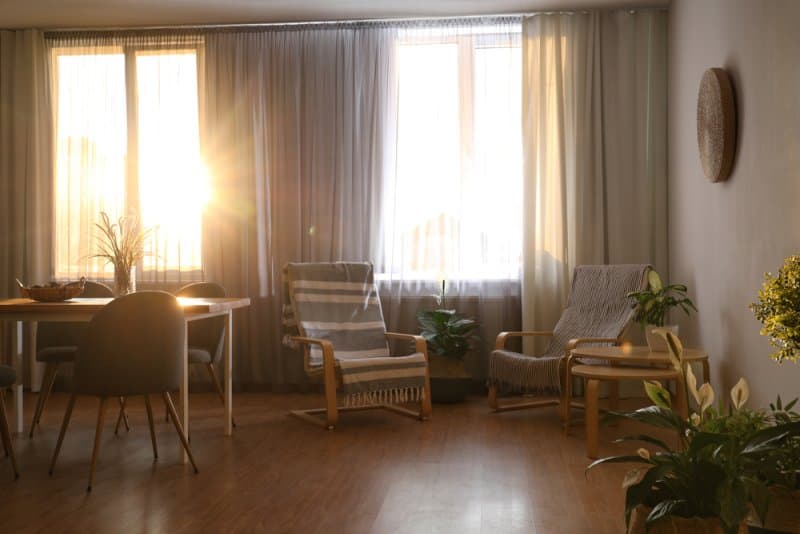
Everyone loves a bright, sun-drenched living room. Until two years later, when you move a throw pillow and realize your navy-blue couch has turned a sickly, washed-out gray. The sun does not care how much you spent on that solid oak dining table or custom leather sectional. Left unchecked, daily sun exposure will dry out wood, crack leather, and completely bleach your fabrics. Knowing how to protect furniture from sunlight is the only way to keep your home looking sharp without living in a pitch-black cave. You do not have to board up your windows. You just need a few smart barriers and simple habits to stop the rays from wrecking your stuff.
Quality furniture costs a small fortune, and replacing it every few years is a massive waste of cash. Constant sun exposure breaks down the chemical bonds in fabric dyes and strips natural moisture straight out of hardwood. Taking basic steps early preserves your investment, keeps colors sharp, and stops premature cracking.
You cannot fix sun damage overnight, so you have to play defense before the fading starts. Follow these exact steps to lock down your rooms.
Watch your rooms from morning to late afternoon. Note exactly which windows get blasted with harsh direct light, especially south- and west-facing glass.
Pull your most expensive pieces—like leather sofas, antique wood tables, and wool rugs—out of the direct beam. Even moving a chair three feet back drastically cuts the damage.
Stick a clear or lightly tinted ceramic film directly onto your glass. Good film blocks up to 99% of ultraviolet rays and cuts down solar heat without ruining your outdoor view.
Hang sheer curtains to diffuse harsh glare during the day, and back them up with lined drapes or blinds that you pull shut during peak afternoon heat.
Blocking the window is half the battle. You also need daily habits that give you extra UV protection for furniture that has to sit near the glass.
Flip your sofa cushions every month and spin your area rugs twice a year. If fading happens, spreading the exposure evenly stops you from getting weird, patchy tan lines on your floor.
Heat sucks the natural oils right out of leather, making it stiff and brittle. Rub a dedicated leather conditioner with built-in UV blockers into the hide every six months.
Drape a thick blanket over the back of a sofa that faces a window. It takes the brunt of the rays, and replacing a forty-dollar throw is way cheaper than reupholstering a couch.
Wax and oil your wood pieces regularly. Using a polish with UV inhibitors creates a thin sacrificial shield that helps protect furniture from UV rays before they hit the bare grain.
Not every room or fabric reacts the same way to heat. You have to look at the specific variables in your home to prevent furniture fading long-term.
Dark, rich dyes absorb way more heat and show fading brutally fast. If a room gets hammered by afternoon sun, stick to lighter neutrals that hide color loss much better.
North-facing rooms barely get any direct hit, so your furniture is mostly safe there. West-facing windows catch the hottest, most aggressive late-day sun and need the heaviest protection.
Delicate natural fibers like silk and cheap cotton fall apart quickly under UV light. Heavyweight, tightly woven synthetics hold their color and structural strength for years longer.
UV rays are not the only villain. Trapped indoor heat and dry air accelerate the breakdown of glues, finishes, and fabric fibers. Keep your room temperature steady.
You should not have to live in the dark just to keep your living room looking decent. Natural light is what makes a house feel alive, but ignoring the slow burn of UV rays will quietly ruin your best pieces. Figuring out how to protect furniture from sunlight comes down to smart layering. Put a solid UV film on your sunniest glass, pull the blinds when the afternoon heat peaks, and rotate your cushions before one side bleaches out. Treat your wood and leather with the right conditioners, and your furniture will stay sharp, rich, and crack-free for decades.
Installing solar control window film is the strongest move. It works around the clock without forcing you to shut your blinds, blocking 99% of UV rays while still letting natural daylight into the room.
It hits wood with a double punch of UV radiation and infrared heat. The rays break down the chemical finish and alter the natural pigment, while the heat dries out the wood fibers until they warp or split.
Vacuum your couches frequently, because trapped dust acts like sandpaper when baked by the sun. Pair that with UV-blocking fabric sprays and flip your loose cushions every few weeks to keep wear even.
Not completely. Regular clear glass stops most UVB rays, but it lets the majority of UVA rays—the exact ones that bleach your rugs and couches—pass straight through. You need Low-E glass or aftermarket film for real protection.
Faded fabric is usually permanent unless you have it professionally dyed or reupholstered. Sun-bleached wood can often be saved, but it takes elbow grease—you have to strip the ruined finish, sand down to fresh timber, and restain it.
Solution-dyed acrylics and polyesters are the absolute toughest. Because the color is baked directly into the liquid fiber before it is even spun into yarn, these fabrics laugh off direct sunlight for years without washing out.
This content was created by AI