

A "wood" label can mean solid oak or printed film over particle board. Sellers aren't always clear, so knowing how to tell if furniture is solid wood protects your money.
These checks need only your hands and a flashlight. They work in showrooms or for solid wood furniture identification at home. In this blog, you'll learn how to separate real wood from look-alikes and why the best types of wood for furniture by strength and use make fakes easier to catch.
Each species has a typical look and price. A mismatch is your first warning sign. Oak shows open grain, maple looks pale, and walnut is dark, so the best types of wood for furniture by strength and use each have a signature look.
Price is the other clue. The best types of wood for furniture by strength and use cost more to harvest and dry, so a "solid walnut" dresser priced below pine is a red flag in any real wood vs. fake wood furniture comparison.
The clearest signs of solid wood furniture appear on edges, undersides, and backs. Makers skimp there because few shoppers look. Here's how to tell if furniture is solid wood without damaging it. Pull a drawer and flip a chair.
Perfectly repeating patterns are a warning, since real timber never repeats. That irregularity is among the most reliable signs of solid wood furniture.
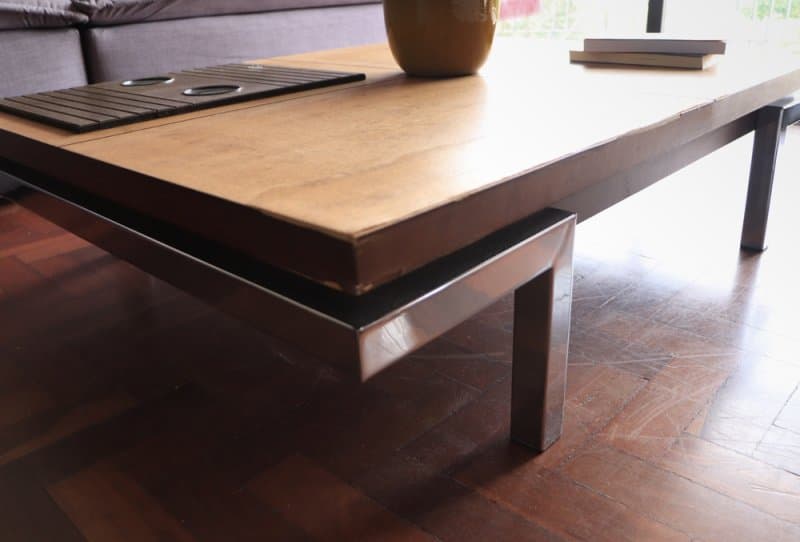
Veneer is a thin slice of real wood glued over a cheaper core. Knowing how to tell if furniture is solid wood keeps you from paying solid prices for veneer. The edge settles most cases. Shine a flashlight along it at a low angle.
Still unsure how to tell if furniture is solid wood? Check the tabletop underside for plain board. Veneer can still show the best types of wood for furniture by strength and use on its face, so judge the core too.
In real wood vs. fake wood furniture comparisons, "fake" usually means laminate or printed foil. These are plastic or paper sheets printed with grain.
Particleboard is wood chips pressed with resin. It's heavy for its size and crumbles at corners. Check screw holes for a chunky texture, a sign it can't match the best types of wood for furniture by strength and use for holding hardware.
Plywood, MDF, and particle board each leave different clues. A side-by-side view makes solid wood furniture identification and the real wood vs. fake wood furniture question simpler.
| Material | Edge Look | Hidden Surfaces |
| Solid wood | Growth rings | Matching grain |
| Veneer over plywood | Stacked layers | Layered core |
| MDF | Smooth fiber | No grain |
| Particle board | Coarse chips | None |
| Laminate or foil | Edge tape | Printed pattern |
Every real wood vs. fake wood furniture check comes back to edges. Then compare it with the best types of wood for furniture by strength and use to confirm the claimed species.
Good solid wood furniture identification also covers construction. A solid piece built badly won't last. Open drawers and press on joints before buying. Tight joinery is one of the signs of solid wood furniture built well.
For example, two solid oak dressers may differ, but the dovetailed one survives more moves, so solid wood furniture identification is really quality identification.
Solid wood furniture identification should also ask whether the species suits the job. Soft pine on a busy dining table won't age well, so match the best types of wood for furniture by strength and use to each room.
Cherry suits a bedroom, and maple a kids' room, both smart uses of the best types of wood for furniture by strength and use.
Online, you lose your hands as tools, so you must know how to identify real wood furniture from words and photos. Phrases like "wood finish" or "solid wood frame" often mean only part is solid. To learn how to identify real wood furniture from photos, request an unfinished edge shot.
Knowing how to identify real wood furniture online also means checking materials lists against the best types of wood for furniture by strength and use. A "solid hardwood" sofa table for $90 deserves questions. Learning how to identify real wood furniture before checkout beats fighting a return.
Learning how to identify real wood furniture isn't about expert knowledge. It's about checking the signs of solid wood furniture on edges and joints.
Once you know how to tell if furniture is solid wood, combine those checks with the best types of wood for furniture by strength and use, and price mismatches jump out. With the best types of wood for furniture by strength and use as your guide, a few minutes of inspection stops you overpaying for a printed surface.
Not necessarily. Many high-end makers use veneer over plywood, often faced with the best types of wood for furniture by strength and use.
Lightly. Heavy sanding breaks through, so use fine paper or strippers.
Not always. It can include plywood and MDF, so ask if the piece is solid throughout.
Somewhat. In real wood vs. fake wood furniture, solid wood sounds denser, but it's only a clue.
A faint smell is normal. Strong chemical odors usually come from composite glues.
This content was created by AI